

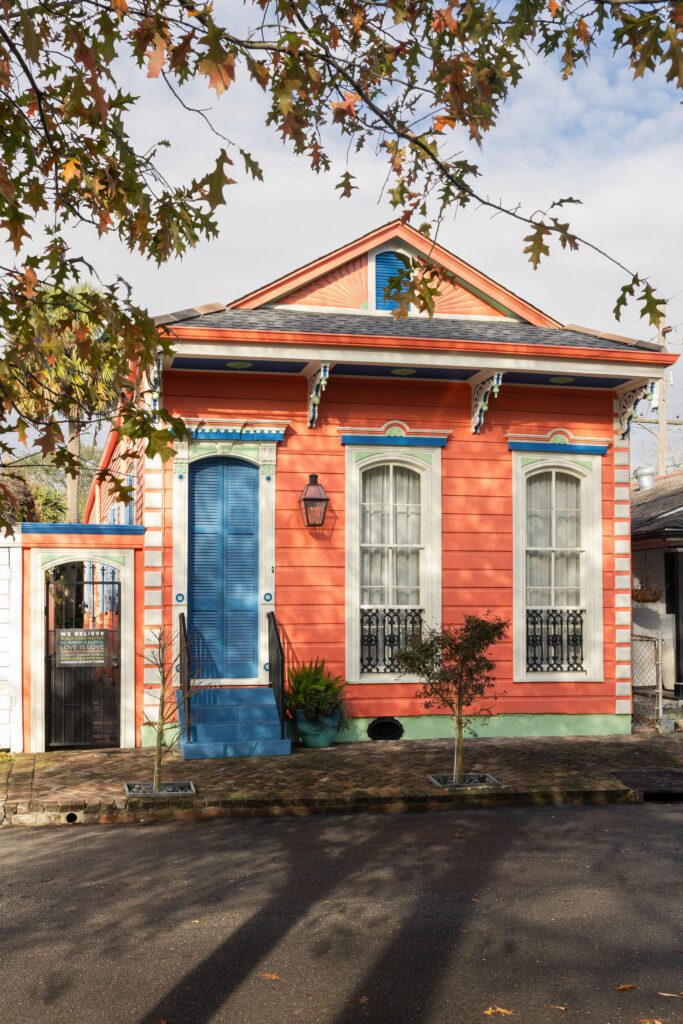
This historic sidehall gallery house in the Bywater maintained its traditional front-room layout and detailing, but a previous rear addition left the kitchen and living areas feeling dark, cramped, and disconnected from the original structure. Our team focused on preserving the historic front rooms and sidehall, while reworking the rear of the home to make it more cohesive and functional. Though only 20’ were added to the back of the house, the transformation was significant.
Existing Conditions
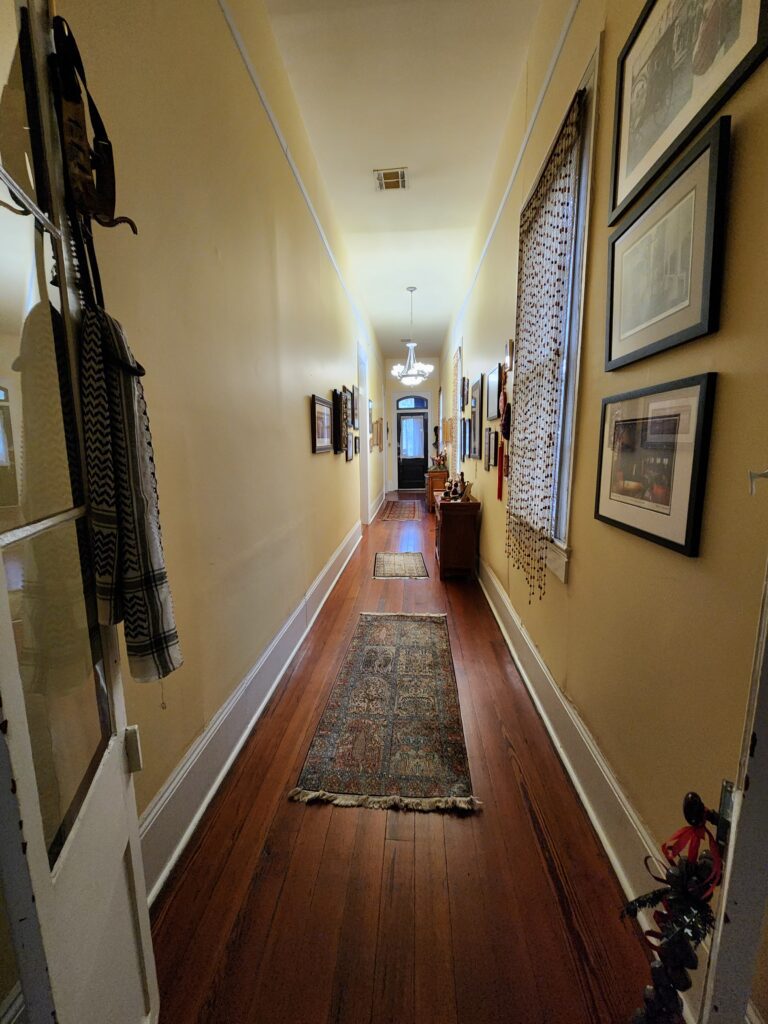
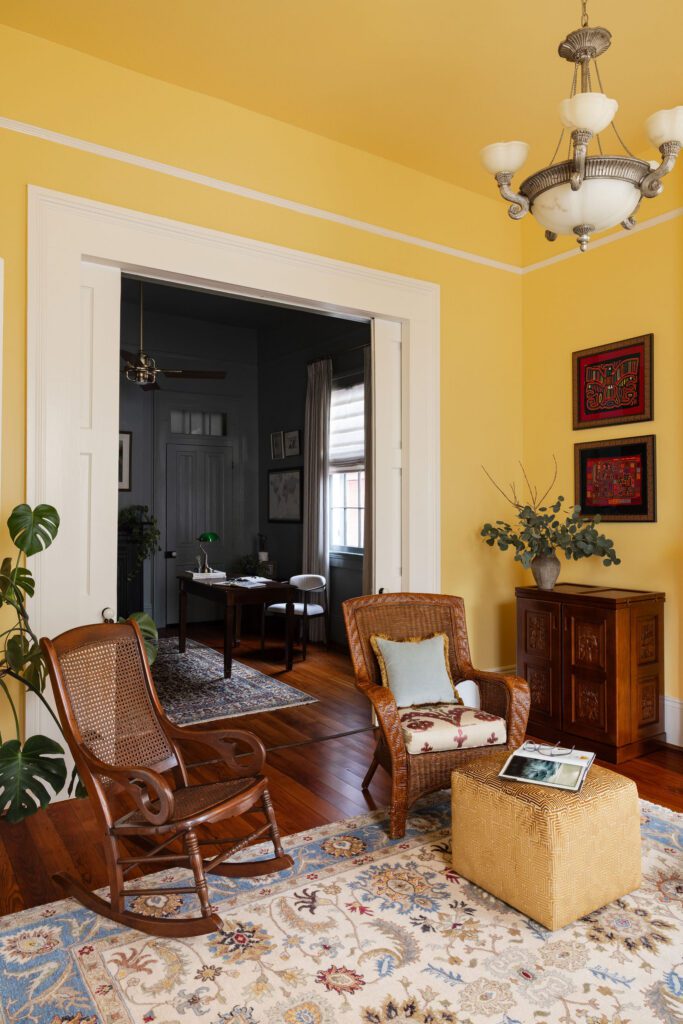
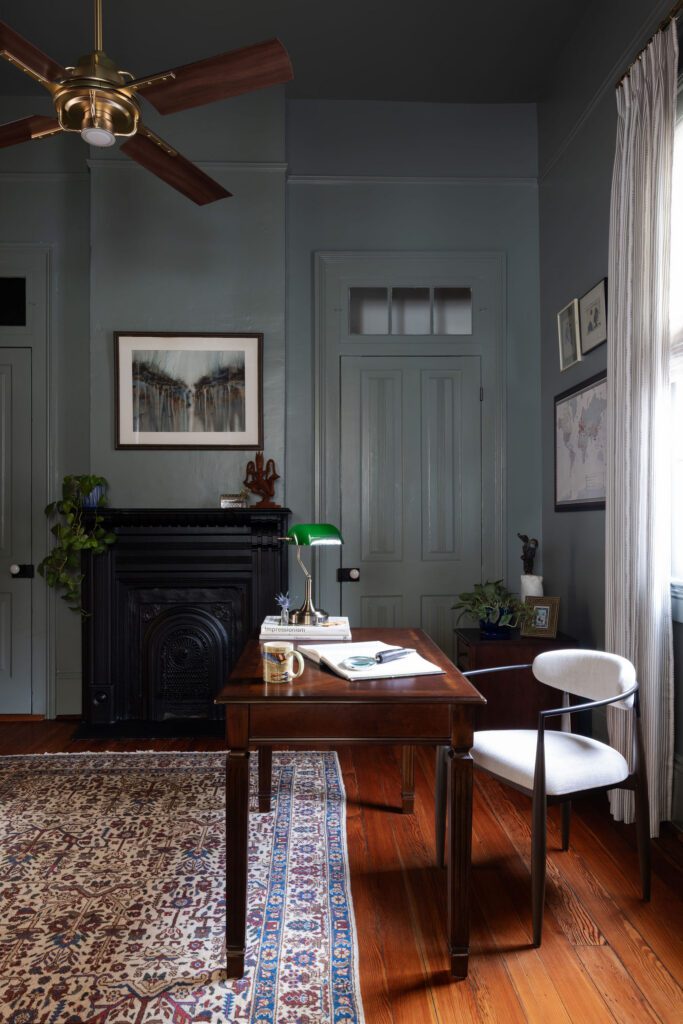
The front of the home retained its historic layout and details: formal rooms aligned along the side hall, original transoms and casings, historic wood windows and doors, and proportions that give New Orleans homes their timeless quality.
The rear, however, told a different story.
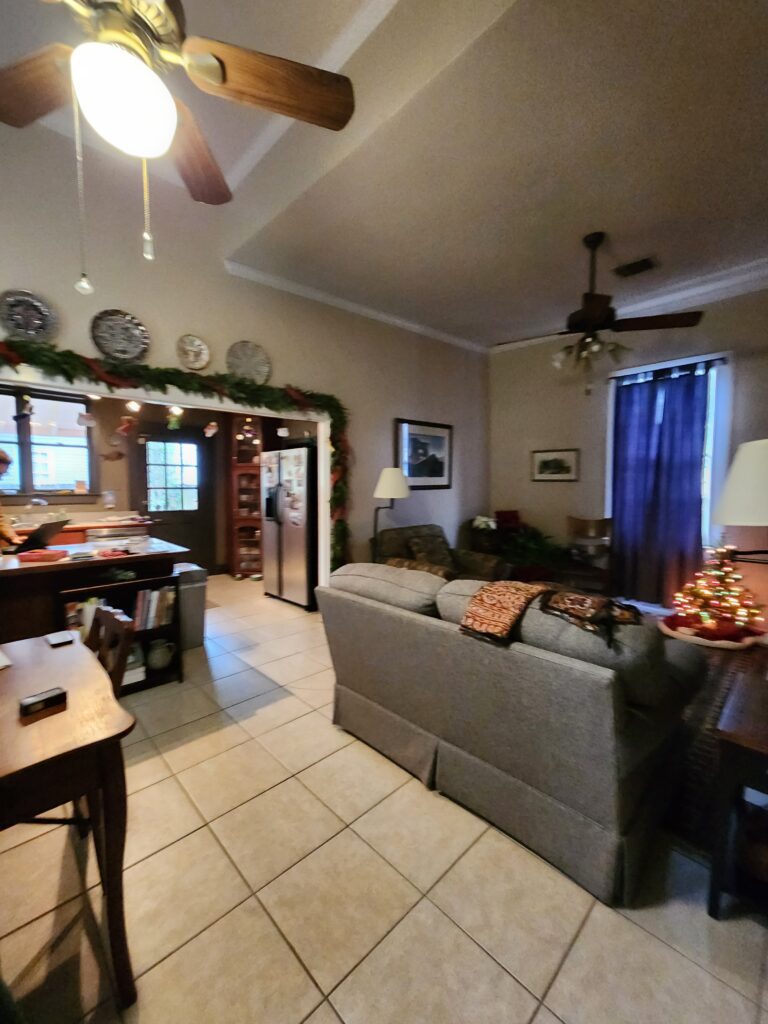
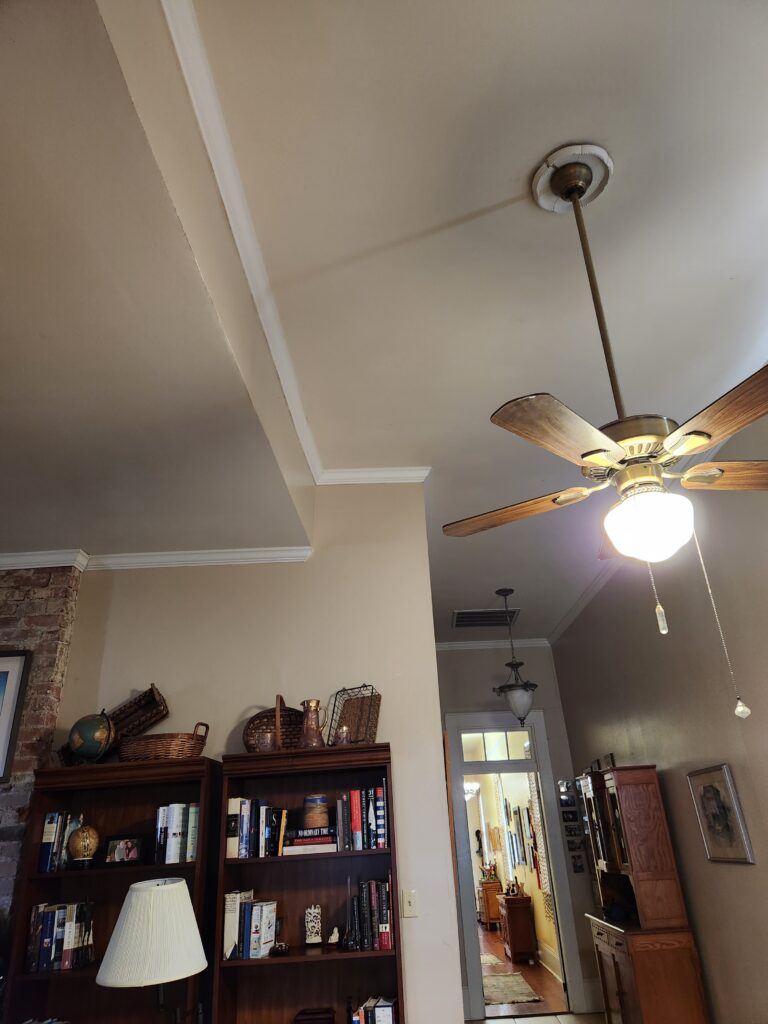
A previous shed-roof addition had created a kitchen and living area with low ceilings and heavy soffits. The spatial compression was immediate when stepping into what should have been the heart of the home. The back door opened directly into the kitchen, lacking presence and functionality.
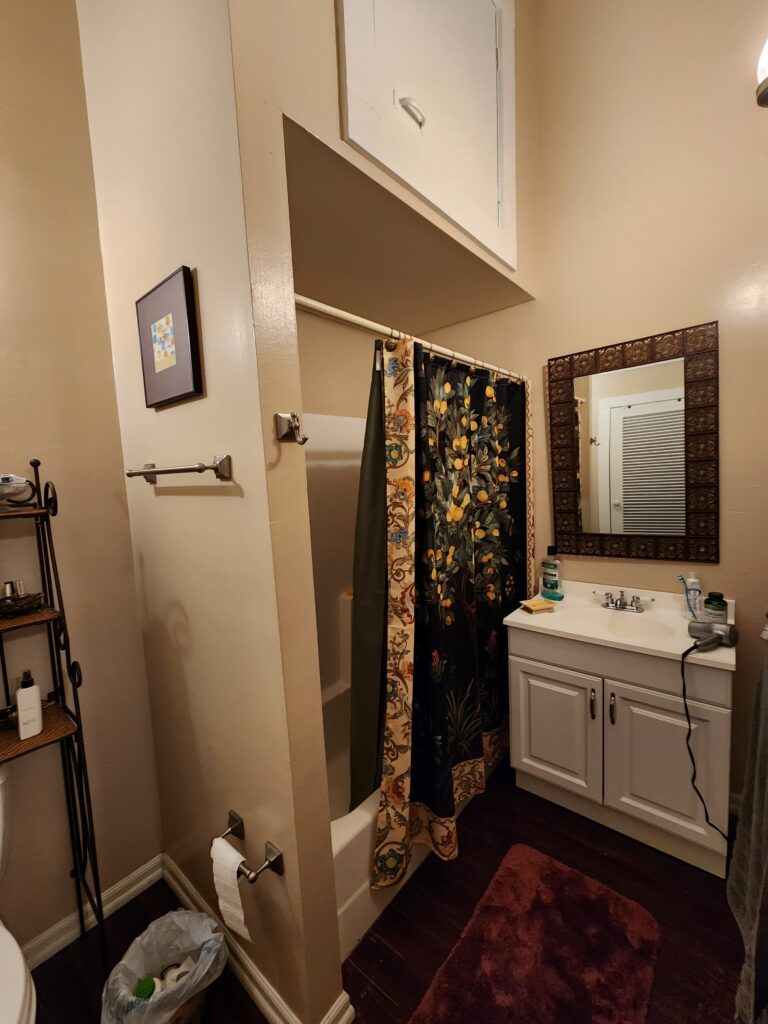
In the private spaces, the bathrooms contained dated fiberglass inserts and inefficient layouts. The primary bedroom lacked a dedicated closet space. With only a linen closet in the bathroom, the clients relied on the office closet for clothes storage.
Design Strategy: Small Addition, Big Shift
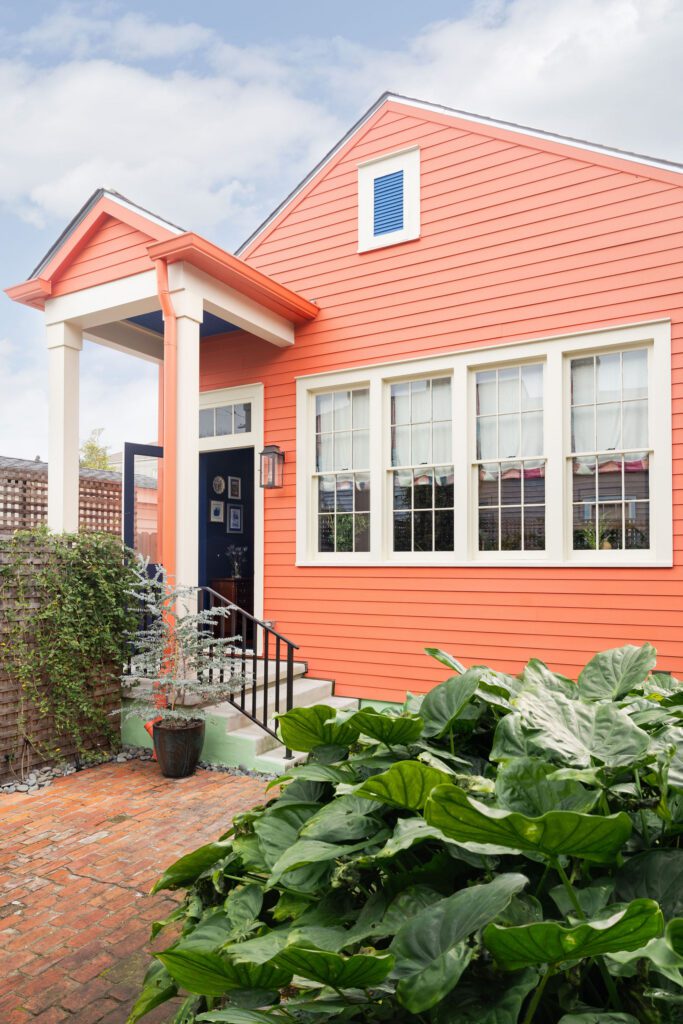
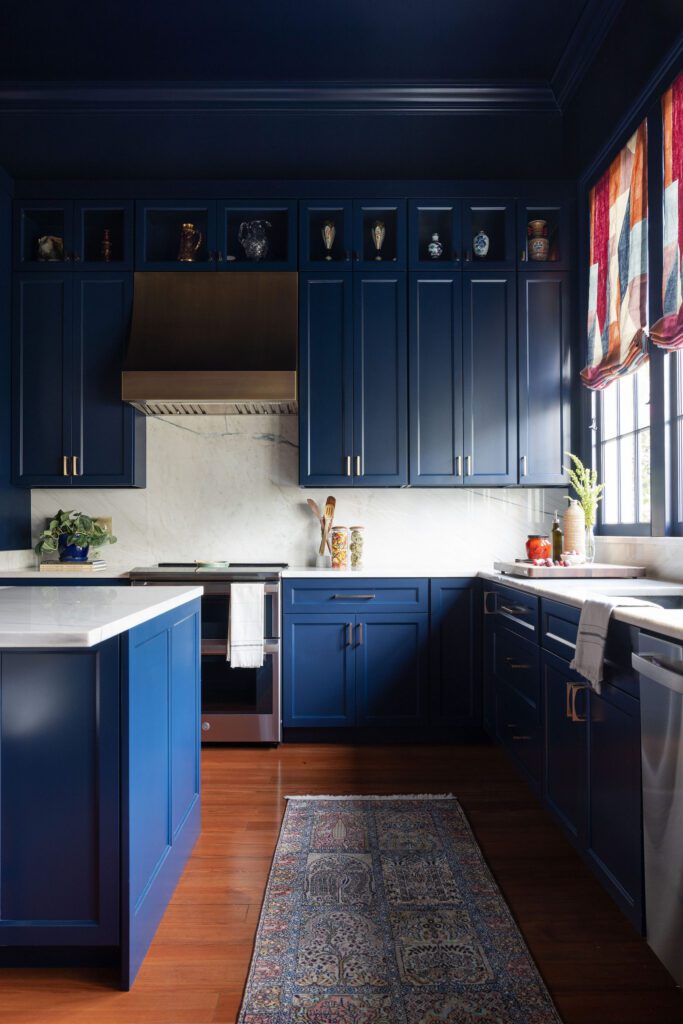
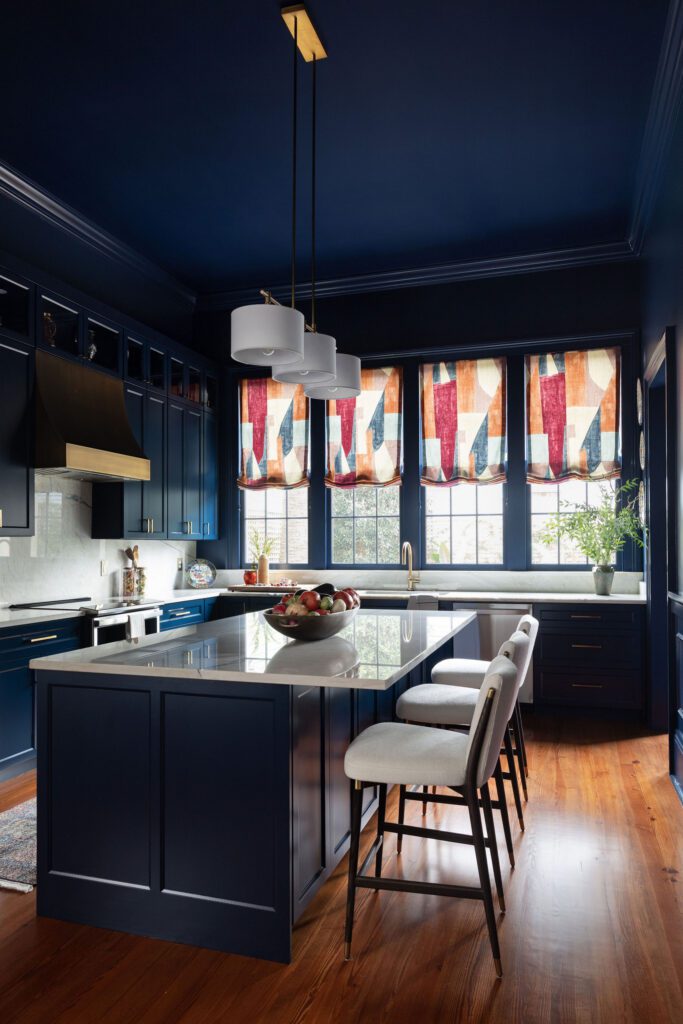
After removing the old shed roof addition, we added on a new 20-foot rear addition to extend the footprint just enough to expand the kitchen, living, and dining spaces while keeping the historic front rooms and side hall intact. The existing gabled roofline was extended, bringing the kitchen ceiling up to align with the 12-foot heights of the main house.
That single move changed everything. What had once felt like an afterthought became a continuation of the historic structure.
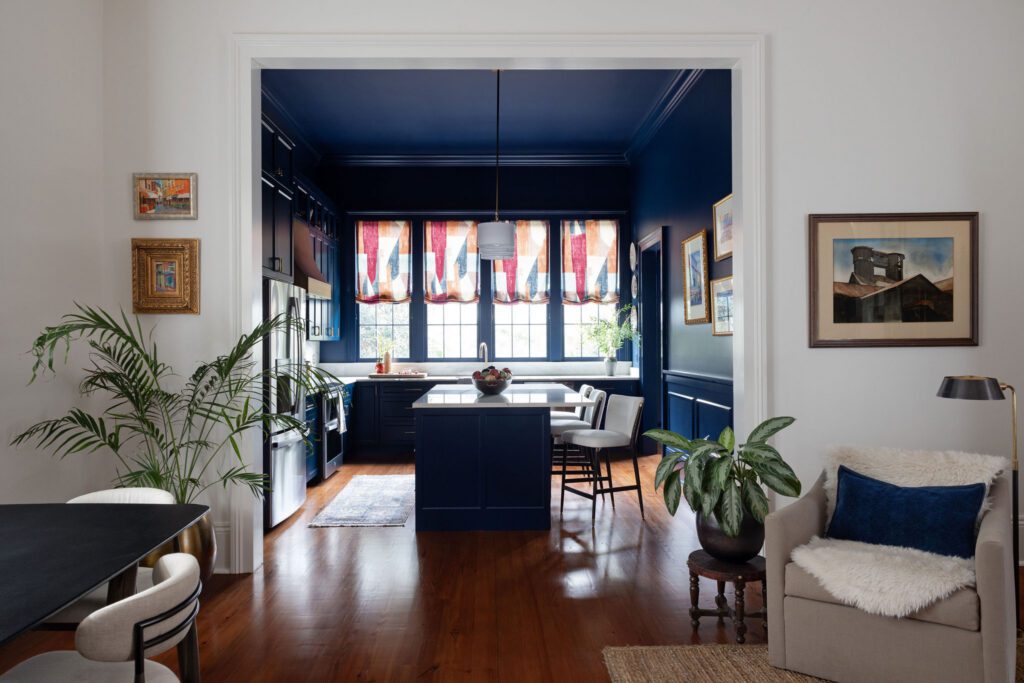
A full bank of windows now anchors the rear wall, flooding the kitchen with natural light and views of the picturesque courtyard outside.
The rear addition also allowed:
- A reworked laundry area
- A vestibule leading out to a small rear porch
- Improved circulation and layout for entertaining
What changed most in this house wasn’t the square footage, it was the way the home feels.
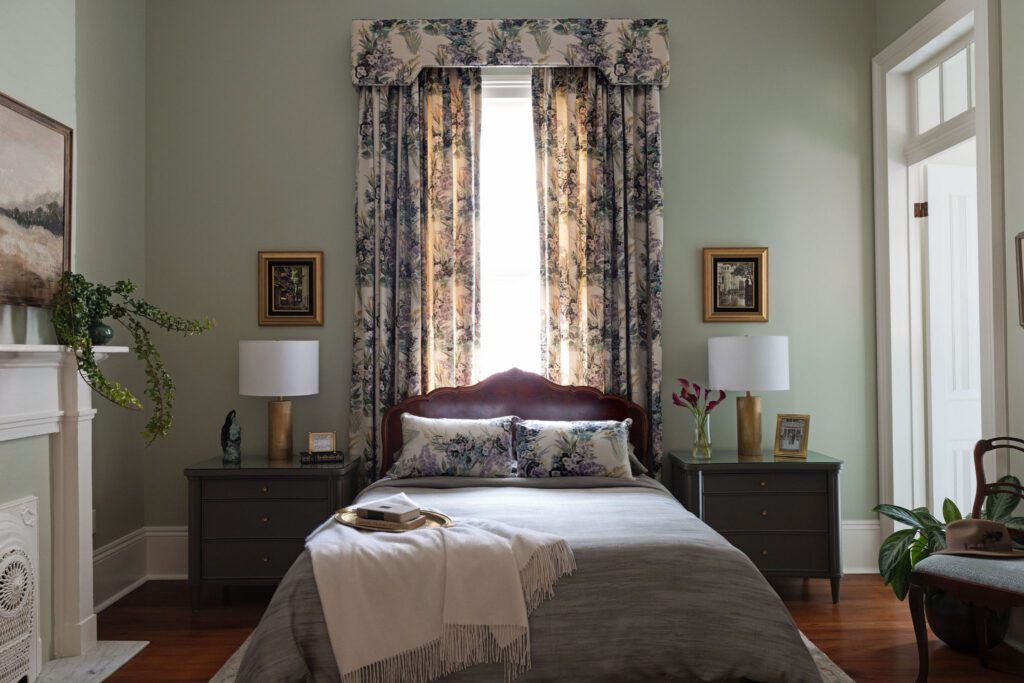
Reworking the Private Spaces
Working within the confinements of the existing space, the bathroom and closet layouts were completely transformed into:
- A deeper primary bathroom with a walk-in shower and double vanity
- A dedicated walk-in primary closet
- A smaller but highly functional secondary full bath
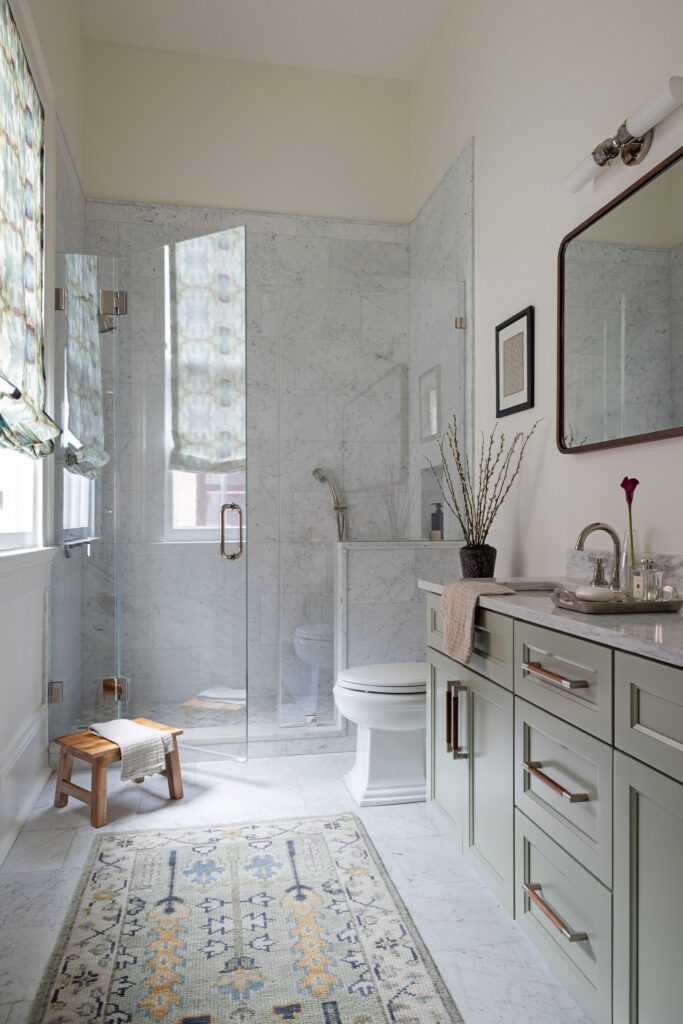
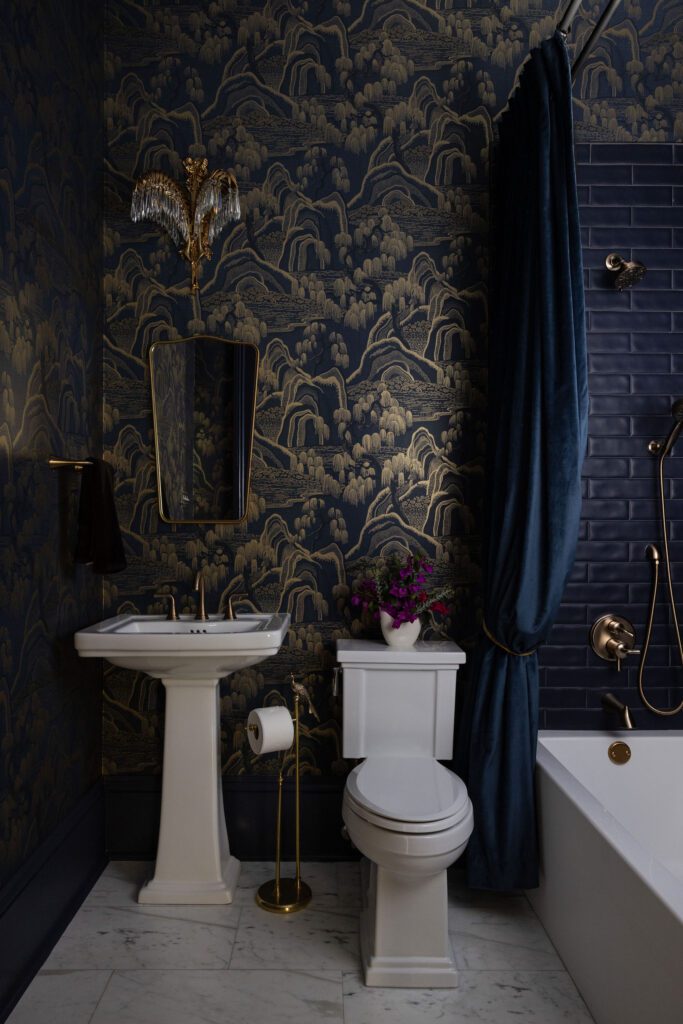
The new primary bathroom was relocated to an exterior wall, formerly occupied by cramped closets, allowing for natural light and more comfort. The secondary bathroom was reduced in size but redesigned to remain efficient and fully functional. This strategic reallocation of space created a true primary suite without increasing the overall footprint.
Throughout the renovation, original transoms and casings were carefully salvaged and reinstalled, maintaining the layered character that gives historic homes their richness.
Process & Client Experience
From schematic design through construction documents and permitting, the process emphasized collaboration and refinement until every detail was perfect. Multiple design alternatives were explored at the beginning of the design process, allowing our clients to see options and create a space tailored to how they live day to day.
“We often just glance at each other, with a big smile, and say: ‘We have a beautiful home!’”
That response is always the goal. Because it’s not just about more space, it’s about preserving what matters, adding what’s needed, and designing a home that feels intentional and uniquely theirs.
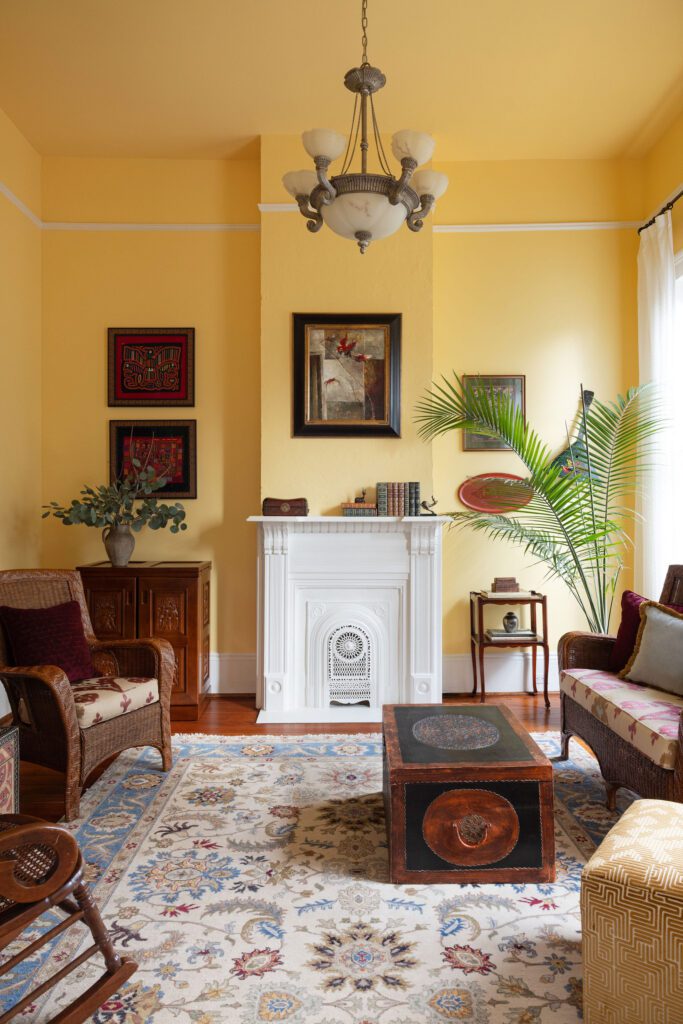
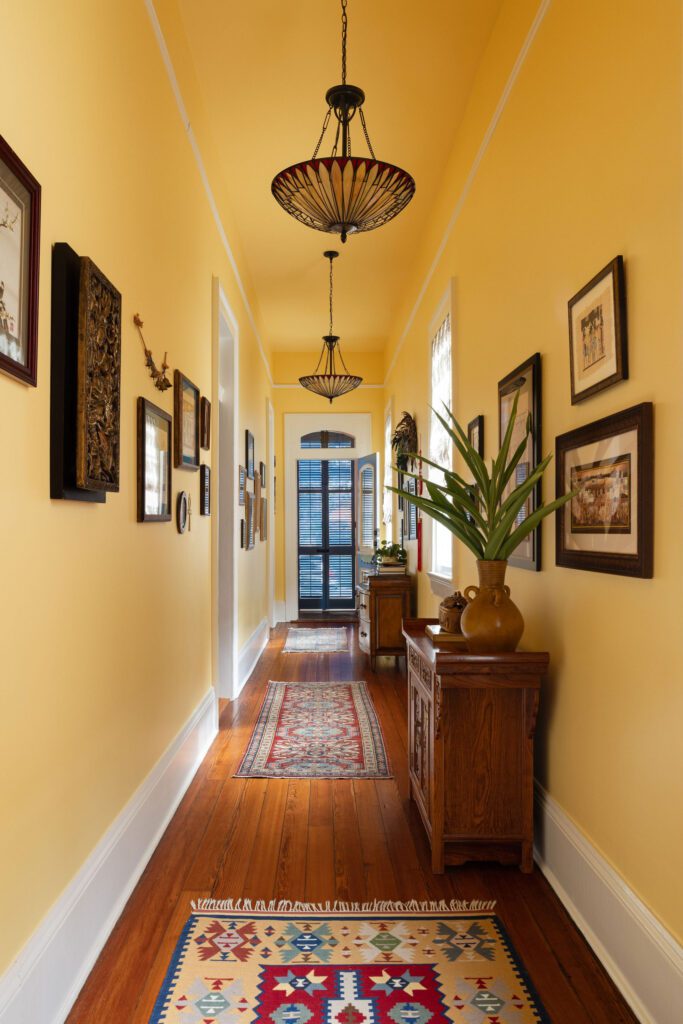
This historic Bywater renovation demonstrates that meaningful transformation doesn’t require dramatic expansion. By respecting the original sidehall structure, carefully adjusting proportions, and improving function and flow where it was most needed, the project elevates the entire home without overwhelming it.
In historic neighborhoods, restraint is often the most powerful design move.
photography: Laura Steffan / interior design: Martha Pearson Designs / construction: Matthews Construction and Renovation / millwork: Parish Woodworks
