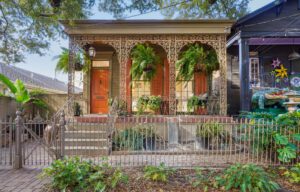

Whether you’ve just found a historic home to renovate, or you’ve owned one for years and you’re finally ready to make it truly yours, you probably have a lot of questions about the process. If you’re planning to build or renovate in a historic district, a big question is how the HDLC will impact your project.
The honest answer: it’s a process with hard deadlines and real requirements. When you understand how it works it stops feeling like an obstacle and starts feeling like part of the project. So whether you’re thinking about a camelback, rear addition, or bringing your historic home back to its original glory, we’ll walk you through what the HDLC is, what the approval process actually looks like, and how working with the right architect makes all the difference.
What Is the HDLC, and Why Does It Matter for Your Project?
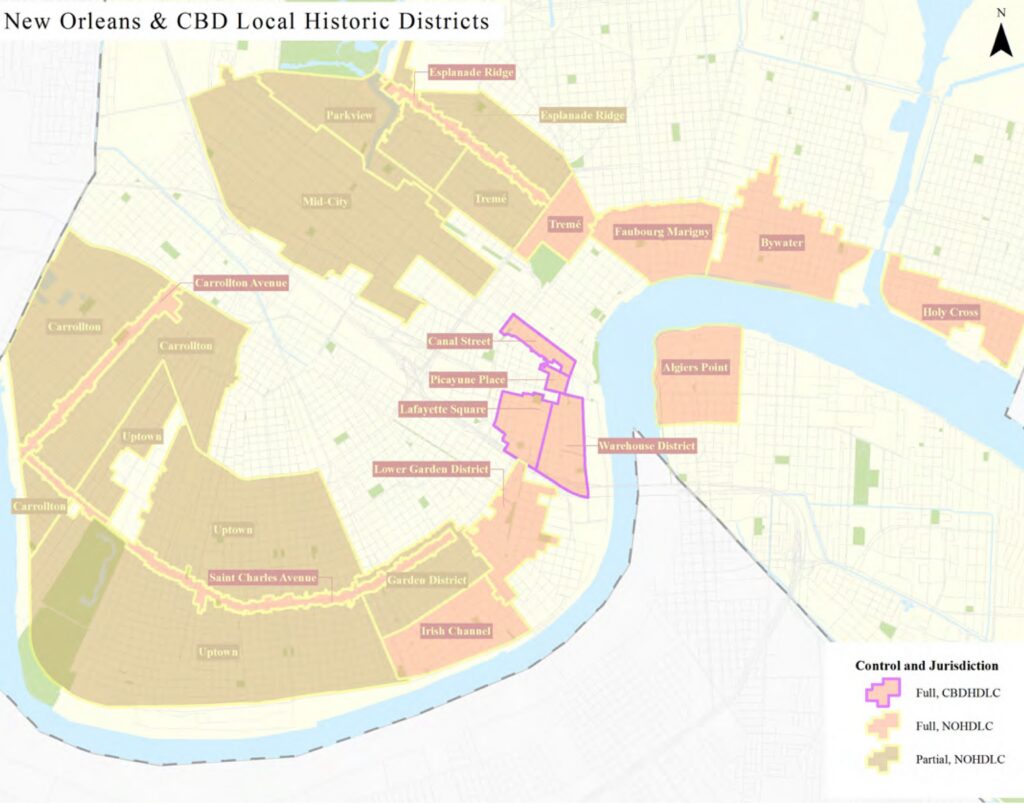
The Historic District Landmarks Commission (HDLC) is the city agency that oversees exterior changes to properties within the city’s designated historic districts. Full HDLC control includes neighborhoods in the Marigny, Bywater, Tremé, Lower Garden District, Irish Channel, and Algiers Point, as well as Esplanade Ridge and St. Charles and Carrollton Avenues. If your home sits within one of those boundaries, the HDLC has a say in what happens to the outside of it. (Note: the French Quarter falls under the Vieux Carré Commission (VCC), which has its own review process.)
The HDLC’s mission is preservation: keeping the architectural character of New Orleans’ neighborhoods intact as the city grows and changes. It’s the reason New Orleans looks the way it does. And for homeowners investing in a historic property, that protection works in your favor too.
Most exterior work on a property within an HDLC district requires review and approval before a building permit can be issued. That includes:
- Exterior renovations and alterations visible from the street
- Camelbacks and additions to an existing building
- New construction on a historic lot
- Accessory structures like garages, pool houses, or ADUs
- Demolition or relocation of existing structures
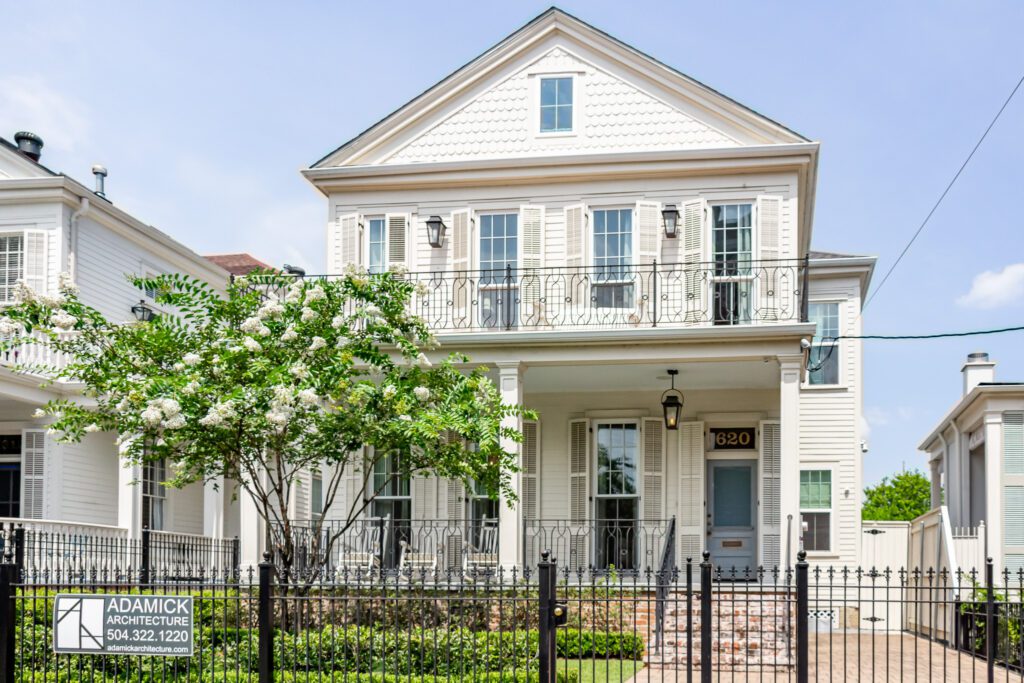
Interior-only work typically falls outside HDLC jurisdiction. But the moment a project touches the exterior of your home, the process begins. Even something as simple as replacing windows or a light fixture require a review. Repainting, however, does not, unless your property falls under the VCC in the French Quarter, which has its own rules around exterior paint colors.
It’s also worth knowing that much of Uptown and Mid-City sit within what’s called a partial control district. In these areas the HDLC has jurisdiction over demolition, major alterations, new construction, and any proposed exterior changes visible from the street. For a full gut renovation or camelback addition, this comes into play more often than homeowners expect as demolition isn’t limited to tearing a structure down. Removing historic materials like original windows, siding, or roofing also qualifies. So does work that crosses any of these thresholds:
- Altering or removing more than 50% of the total exterior walls
- Removing or altering more than 50% of the existing roof structure
- Removing or altering more than 25% of historic materials on the primary facade
- Raising an existing building to create additional habitable space
Another thing worth calling out for camelback additions specifically: the HDLC requires that the second story begin no more than two rooms back from the front of the home. This preserves the historic street-facing footprint and character of the original structure, and it’s a design constraint we factor in from the very start.
The HDLC Approval Process
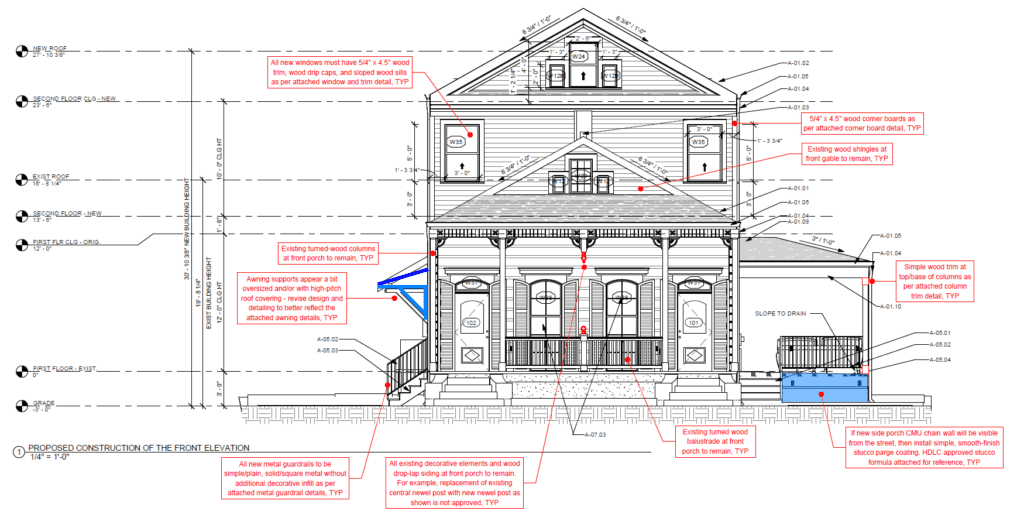
The approval process moves through three phases. From a complete submission to final approval, plan on a minimum of 6 to 8 weeks when everything goes smoothly. Projects that require revisions can take significantly longer, which is why getting it right from the start matters.
Phase 1: Pre-Application. Before anything is formally submitted, the HDLC offers the opportunity to consult with staff on initial design ideas to find any potential issues early. It’s a vital step we use on every project, and one that saves time and money for our clients.
Phase 2: Conceptual Review. Once your application is complete, your project goes before the Architectural Review Committee (ARC). The ARC are licensed architects with deep experience in New Orleans historic districts. They review the design and either recommend approval or request revisions. From there it moves to the full HDLC Commission for final sign-off. Both meetings occur only once per month and are open to the public.
Phase 3: Final Drawing Review. Once conceptual approval is received, detailed construction drawings are submitted for staff review. After any corrections are incorporated, the drawings are stamped and the project moves to the Department of Safety and Permits for a building permit.
What the HDLC Is Looking For
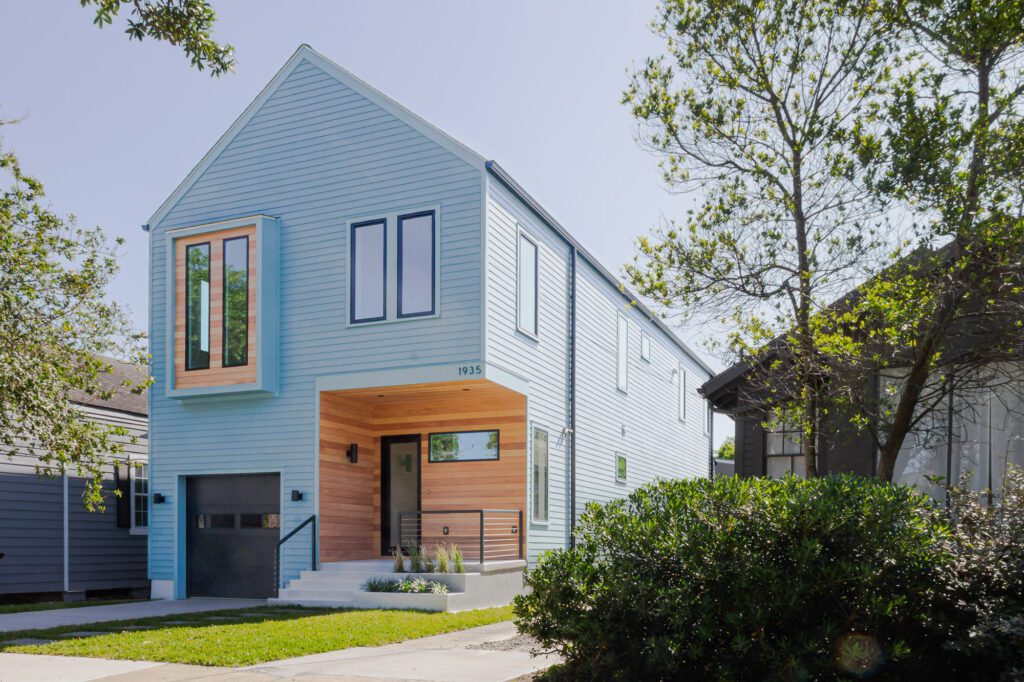
The HDLC is not asking you to freeze your home in time or replicate the past exactly. They’re evaluating whether the proposed work is compatible with the character of the home and surrounding neighborhood. The goal is to fit in, not stick out. That includes:
- Scale and massing: Does the size and form of the new work relate to neighboring homes, or does it overpower them?
- Setback: Does the home sit in line with neighboring homes, or does it break the rhythm of the block?
- Materials: Are the exterior materials appropriate to the historic context? Imitation materials such as vinyl siding and synthetic finishes are consistently flagged.
- Window and door patterns: Do proportions and placement reflect the period of the home and surrounding buildings?
- Architectural elements: Are porches, galleries, dormers, and other projections appropriate for the home style and the neighborhood?
Common Reasons Projects Get Sent Back
- Incompatible exterior materials
- An addition that visually overwhelms the original building
- Front additions, which are generally not permitted
- Window or door choices that don’t fit the scale and proportions of the home
- Camelback additions that don’t meet height or setback requirements
- Incomplete drawing submissions

Our Process
Our process has been shaped and refined by over a decade of working with the HDLC in New Orleans. Our relationships with the city means we can have early, honest conversations with staff before a design is submitted for review, allowing us to resolve any potential issues without losing time.
We address timelines and budgets at every step of our design process, because a missed submission window means a full month added to your timeline. We build in checkpoints around those deadlines, so that when we submit, everything has been thought through and is ready for review/approval. And when the best solution for a client’s project isn’t the most straightforward path through review, we know how to make the case for it, clearly and confidently.
Sometimes the most valuable thing we can do is be honest with a client early. If a project as envisioned isn’t going to clear the HDLC, or if there’s a better path forward, we’ll say so and let our client decide how they want to proceed. Our experience means we can have those conversations before they become costly ones.

Let’s Talk About Your Project
If you’re planning a renovation, addition, or new construction on a historic New Orleans property, the earlier we’re involved, the more we can do for you. The HDLC process rewards preparation, and preparation starts with a conversation.
Contact us here and tell us what you’re thinking. We’d love to hear about it.
For official HDLC guidelines and meeting schedules, visit nola.gov or call (504) 658-7040.